Commercial kitchen sanitation pest auditing establishes an engineering-style baseline for food facilities facing the elevated moisture conditions of Shelby County and the lower Mississippi River basin. An audit differs…
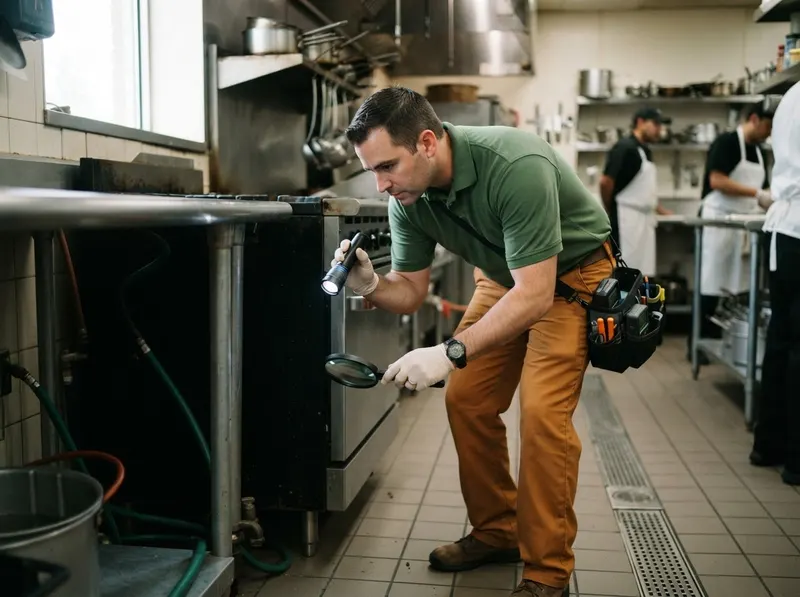
Commercial kitchen sanitation pest auditing establishes an engineering-style baseline for food facilities facing the elevated moisture conditions of Shelby County and the lower Mississippi River basin. An audit differs fundamentally from chemical pesticide application: chemical spraying masks active filth fly and German cockroach populations temporarily, whereas a sanitary audit maps the exact mechanical deficiencies sustaining them. A facility manager operating a historic restaurant in Midtown or Cooper-Young contends with settling foundations, porous brick mortar, and decades-old subterranean plumbing lines that standard surface treatments bypass. Conversely, newer strip-center culinary spaces in Cordova or East Memphis frequently suffer from improperly sealed drywall-to-slab baseboards and uncaulked stainless steel pass-through conduits where ambient kitchen heat fosters hidden insect cycles.
The trade-off of a dedicated audit over a routine service visit is upfront analysis time versus ongoing recurring cost. An audit requires 90 to 180 minutes of structural inspection across non-visible zones, including walk-in cooler condenser pans, dishmachine drain troughs, hollow table legs, and grease interceptor collars. In regions like Binghampton and Highpoint Terrace, where older distribution hubs convert into ghost kitchens and bakeries, unsealed pipe penetrations across utility rooms create immediate travel paths for rodents navigating exterior drainage corridors. In Raleigh and Whitehaven, facilities handling high-volume daily service often discover that nightly floor mopping merely pushes organic slurry into cracked floor tile grout, producing an active breeding film for phorid flies that air curtains and door sweeps cannot stop.
Following the inspection, facilities receive a verified diagnostic punch list outlining exact structural corrections. Corrections are separated into three definitive tiers: immediate sanitation items such as bio-enzymatic drain clearing, physical exclusion requirements including silicone-carbide door sweeps and copper mesh sealants, and moisture-lowering mechanical adjustments to exhaust hoods and refrigeration drip pans. This approach replaces ongoing monthly contract fees with measurable structural fixes, allowing kitchen management to maintain an insect-resistant perimeter tailored to delta soil shifts and urban commercial density.
Every job gets a firm, written price after a free on-site visit.
Tell us about your commercial kitchen sanitation pest auditing job in Memphis and we'll send a clear, written quote, usually the same day.
 BugBlocker Pest Control