Termite activity in Shelby County is intensified by alluvial floodplain soils and high annual humidity, driving subterranean colonies through perimeter foundation cracks as narrow as 1/32 of an inch. Older housing…
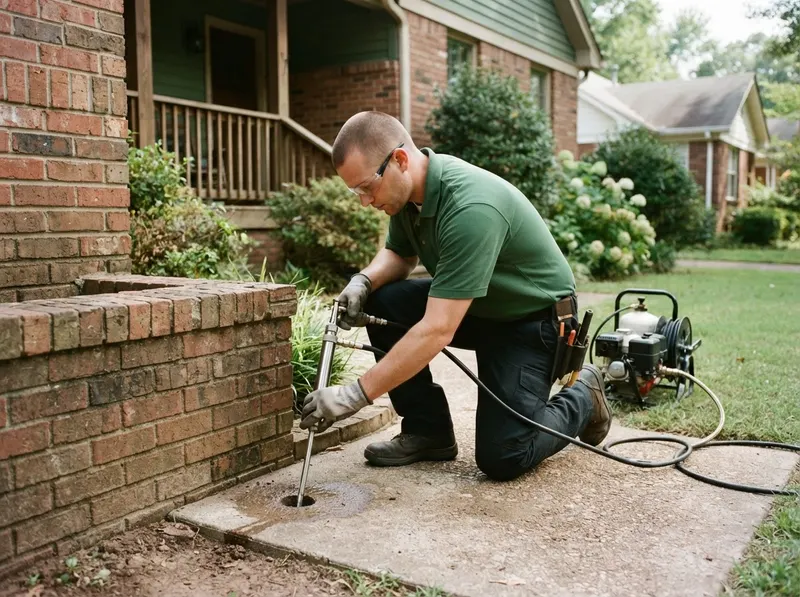
Termite activity in Shelby County is intensified by alluvial floodplain soils and high annual humidity, driving subterranean colonies through perimeter foundation cracks as narrow as 1/32 of an inch. Older housing stock in Midtown, Central Gardens, and Cooper-Young frequently rests on unsealed crawl spaces and historic brick piers, creating direct soil-to-wood pathways that allow workers to transport moisture directly into structural sills. Conversely, modern monolithic concrete slabs in Cordova and East Memphis often settle over time, exposing plumbing bath traps and expansion joints beneath floor coverings. Targeted barrier treatments isolate these hidden conduits without requiring continuous monthly contracts.
Subterranean termite defense balances non-repellent liquid soil treatments against localized exterior baiting stations. A liquid application using termiticides such as fipronil bonds directly to the dense silt and clay soils of Highpoint Terrace and Binghampton, forming an undetectable lethal continuous zone that termites carry back to the subterranean nesting center. In contrast, advanced monitoring stations placed every 10 to 15 linear feet around the structure
Tell us about your subterranean termite treatment job in Memphis and we'll send a clear, written quote, usually the same day.
 BugBlocker Pest Control