Memphis properties experience extreme subterranean ant pressure due to the alluvial silt loess soils and extended humidity along the Mississippi River basin. In older architectural pockets such as Central Gardens,…
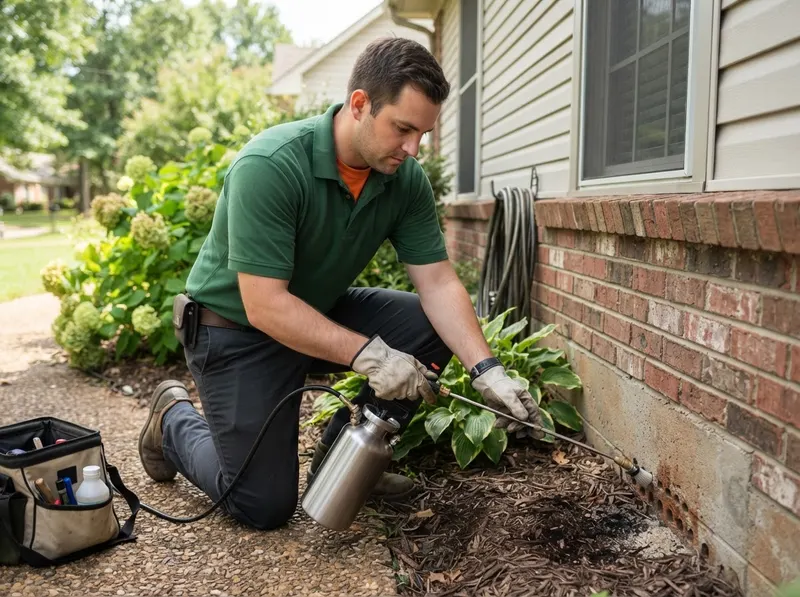
Memphis properties experience extreme subterranean ant pressure due to the alluvial silt loess soils and extended humidity along the Mississippi River basin. In older architectural pockets such as Central Gardens, Midtown, and Cooper-Young, mature oak canopies and historic brick foundations provide moisture trails that funnel Argentine ants (Linepithema humile) directly behind exterior fascia. These species develop multi-queen megacolonies in organic debris, mulch beds, and cracked mortar lines. Spraying commercial contact insecticides indoors triggers a biological defense mechanism known as budding, causing a single colony to divide into multiple independent reproductive sub-units inside drywall cavities. Effective colonization management halts this dynamic by establishing a targeted, non-repellent exterior perimeter barrier that workers traverse and unconsciously transport deep into subterranean nursery chambers.
Newer slab-on-grade builds throughout Cordova, Raleigh, and East Memphis present different structural vulnerability points. In neighborhoods like Highpoint Terrace and Whitehaven, expansive Delta clay soils dry and pull away from slab footings during summer heat spikes, opening subterranean expansion gaps measuring 0.5 to 2 inches wide. Odorous house ants and red imported fire ants utilize these concealed subterranean paths to bypass visible perimeter surfaces and enter expansion joints directly beneath hardwood flooring or tile installations. Applying a high-volume liquid barrier 10 feet into adjacent turfgrass and 3 feet up vertical brick curtain walls isolates these subterranean runways. Granular bait matrices placed in dense landscape beds adjacent to foundation walls target outdoor foraging trails while keeping living quarters odor-free.
Decision guidance dictates treatment selection based on exterior landscape density and foundation design. Properties surrounded by dense ground cover or mature pine straw benefit from systemic perimeter control because clearing the soil-line perimeter eliminates foraging bridges. If tree canopies directly touch roof shingles, horizontal perimeter barriers must be paired with mechanical arbor trimming; otherwise, arboreal acrobat ants bypass the treated ground zone entirely. Perimeter barrier control trades off rapid single-bug knockdowns for the complete structural suppression of the underlying nest matrix over a 14-to-21-day feeding window, preserving indoor air quality without high-pressure recurring monthly service agreements.
Every job gets a firm, written price after a free on-site visit.
Tell us about your perimeter ant colonization control job in Memphis and we'll send a clear, written quote, usually the same day.
 BugBlocker Pest Control